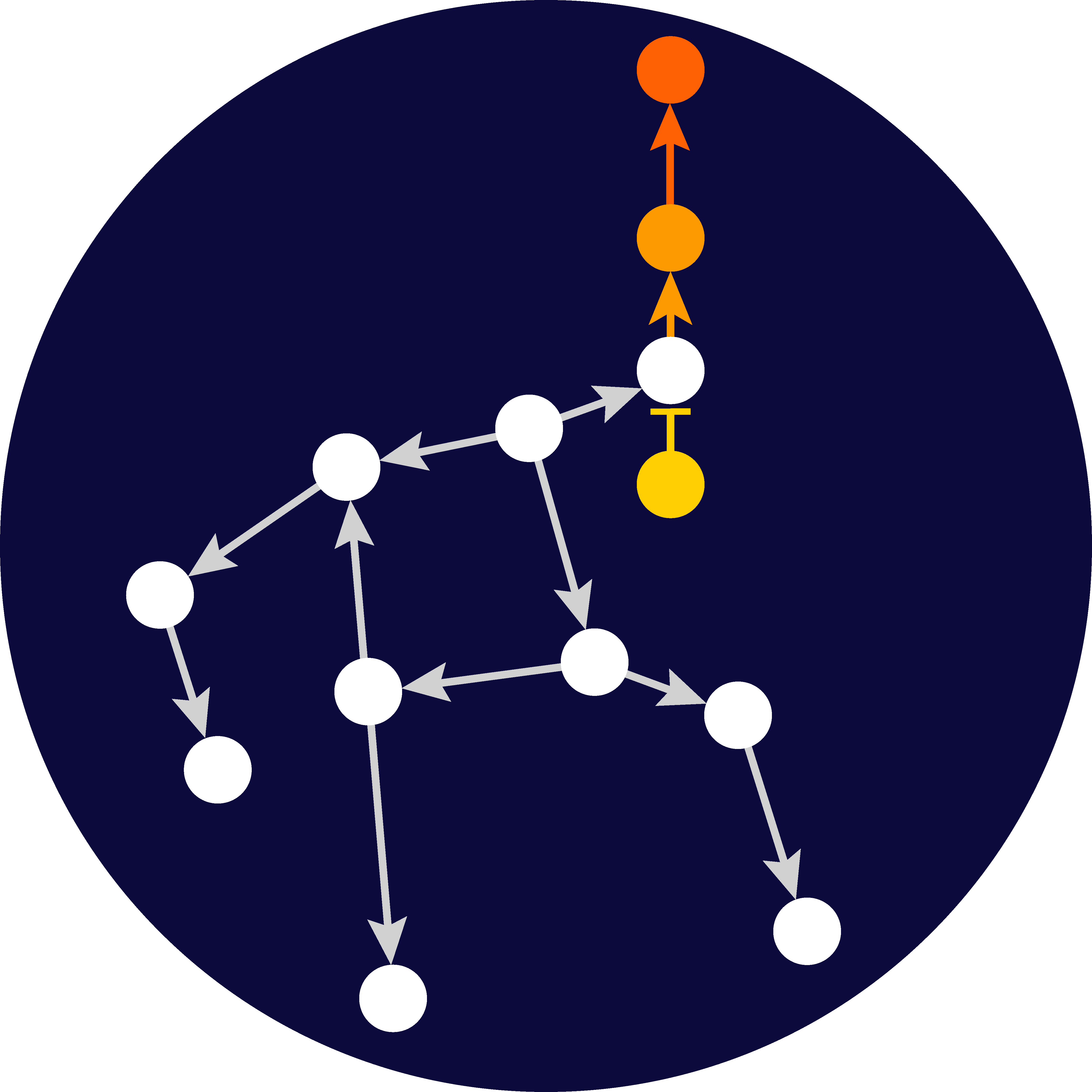
Padala2017- ERK, PI3K/Akt and Wnt signalling network (Ras mutated)
BIOMD0000000654This model is described in the article:
Abstract:
Perturbations in molecular signaling pathways are a result of genetic or epigenetic alterations, which may lead to malignant transformation of cells. Despite cellular robustness, specific genetic or epigenetic changes of any gene can trigger a cascade of failures, which result in the malfunctioning of cell signaling pathways and lead to cancer phenotypes. The extent of cellular robustness has a link with the architecture of the network such as feedback and feedforward loops. Perturbation in components within feedback loops causes a transition from a regulated to a persistently activated state and results in uncontrolled cell growth. This work represents the mathematical and quantitative modeling of ERK, PI3K/Akt, and Wnt/?-catenin signaling crosstalk to show the dynamics of signaling responses during genetic and epigenetic changes in cancer. ERK, PI3K/Akt, and Wnt/?-catenin signaling crosstalk networks include both intra and inter-pathway feedback loops which function in a controlled fashion in a healthy cell. Our results show that cancerous perturbations of components such as EGFR, Ras, B-Raf, PTEN, and components of the destruction complex cause extreme fragility in the network and constitutively activate inter-pathway positive feedback loops. We observed that the aberrant signaling response due to the failure of specific network components is transmitted throughout the network via crosstalk, generating an additive effect on cancer growth and proliferation.
This model is hosted on BioModels Database and identified by: BIOMD0000000654.
To cite BioModels Database, please use: Chelliah V et al. BioModels: ten-year anniversary. Nucl. Acids Res. 2015, 43(Database issue):D542-8.
To the extent possible under law, all copyright and related or neighbouring rights to this encoded model have been dedicated to the public domain worldwide. Please refer to CC0 Public Domain Dedication for more information.
Max Y
And translate the model using SBMLtoOdin::importSBMLfromBioModels(BioModel_ID, file_name)
Project idea and SBMLtoOdin: Leonie Lorenz and John Lees,
Development of Menelmacar website: Antoine Andréoletti,
Web design: Andrea Epifani, Zeqing Lu (Gomoku Studio)
Models are sourced from EMBL-EBI's BioModels